about the institute
By combining traditional and contemporary experiential learning opportunities, the proposed institute will answer recent calls from elected officials, educators, think tanks, and advocacy groups to create more equitable and innovative pedagogies that meet the needs of 21st century students. Through a blended online and in-person format, participants will critically examine the FWP model and the work it produced, consider FWP methods and practices, and develop multimodal approaches for performing and teaching primary and secondary research. Participants will design curricula and pedagogical methods that align with their disciplinary interests, and that invite students and local publics to consider the FWP’s administrative and political history, its source material, its methodologies, and its legacies. The aim is to expand the participants’—and thus future students’ and community members’—research experience and digital and print literacies while fostering historical awareness and civic engagement.
To consider the FWP through a pedagogical lens, visiting scholars and participants will engage some of the following themes and questions throughout the institute’s three weeks:
Historical Content
- Who and what did the FWP study and why? How did the centralized administration guide the process versus the local offices and individual writers?
- What do the archives tell us about regional and ethnic diversity in the U.S. during the 1930s?
- What kinds of materials were never published, and what revelations do they offer?
- What categories of materials were digitized, and which were not?
- What kinds of values (religious, ethical, political, philosophical) are imparted or represented through these documents?
- What is the value of oral history and documentary writing in a time of crisis?
Methodologies
- How does the FWP present opportunities for cross-disciplinary research? In other words, what is its relationship to historical, cultural, and literary inquiry and twentieth and twenty-first century methodologies and practices?
- What can it tell us about documentary writing and oral history and how have they changed?
- What can we learn from the methods the federal writers employed to conduct their research?
- How are the FWP’s methods relevant to the digital age? How can they be adapted?
- How can we understand these methods and the pluralistic mission of the FWP as contributing to sites of social change?
Overview of the Three Weeks

This three-week blended institute will allow substantive study of the FWP’s digitized and undigitized archives at the Library of Congress to develop curricula, pedagogical practices, and public humanities projects that bring this still underappreciated cultural resource to wider audiences. The first virtual week of the institute will engage a group of accomplished guest faculty in roundtable discussions with participants about the Project’s history, mission, organization, failures, and achievements—the American Guide Series, the former slave narratives, extensive life histories and folklore collections, and literary works written by federal writers during and after the New Deal era—in light of new FWP-inspired research, humanities, and educational programs.

The second week of the institute at the Library of Congress will enable participants to engage in guided, onsite, archival research of the 85% of the FWP collections in the Manuscript Division that have yet to be digitized (See schedule for detailed finding aid). In addition to the project co-directors, Library of Congress staff along with several visiting scholars will orient participants to archival research and the FWP collections and guide them in their individual and group project throughout the week.

The third week of the institute will center on the development of participant projects with another group of returning and new visiting scholars who will also be available for individual and group consultations about new scholarly research and pedagogical and public humanities approaches, practices, and resources. Collectively, we will share content, methods, practices, and approaches to the trove of FWP materials—digitized and collated from the undigitized collections—that can strengthen students’ research and literacy skills, expose college and public audiences to a significant moment in American history, and inspire contemporary oral history and documentary projects.
The program of study will maximize opportunities for experiential learning, hands-on research, consultations with codirectors and guest faculty, and tangible outcomes—curricula, publications, digital stories and maps—informed by theory and practice, scholarly research, and pedagogical resources, tools, and approaches to be used in the classroom, public libraries, history museums, and other sites of teaching and learning.
PREVIOUS NEH INSTITUTE
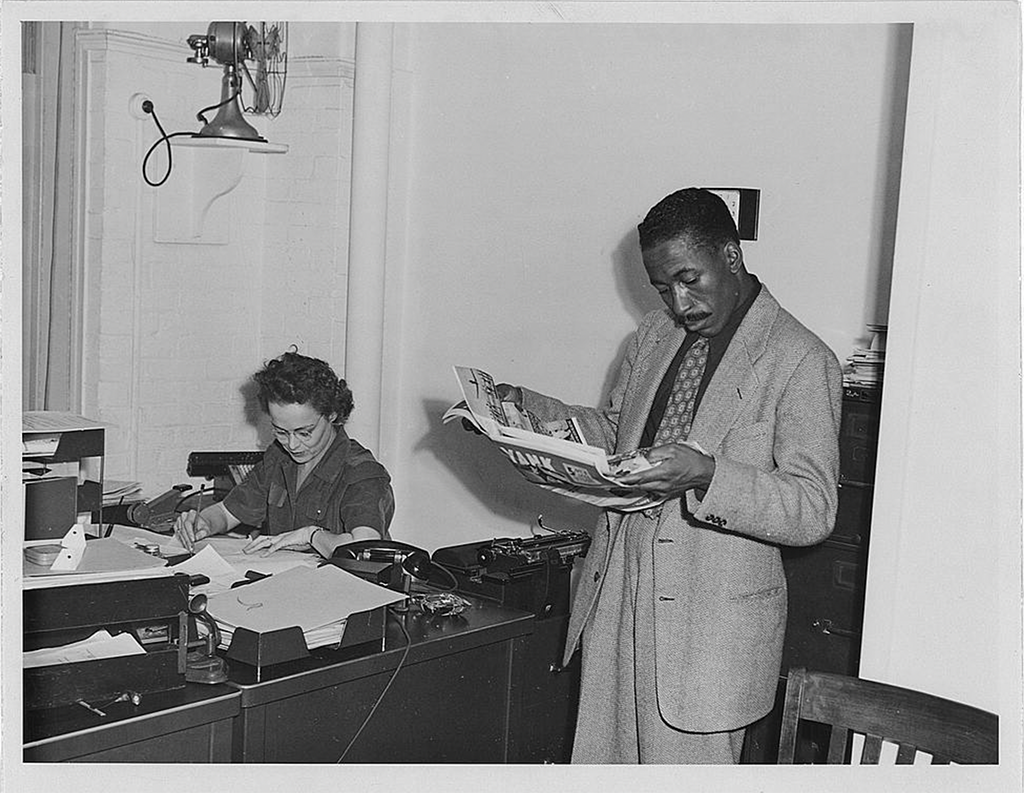
The 2026 Summer Institute follows a previous Summer Institute in 2021 entitled, “The New Deal Era’s Federal Writers’ Project: History, Politics, and Legacy.” The 2026 institute will engage many of the same authors and producers as visiting scholars as well as several 2021 participants It will also incorporate and expand on research that was developed and showcased at two other watershed FWP initiatives.
The 2021 NEH Summer Institute brought together 25 graduate students, adjunct and fulltime college faculty, and independent scholars who met every weekday online for four weeks to reevaluate the FWP’s enduring cultural influence. The intensive workshop established an important foundation for understanding the FWP as its own unique area of historical and cultural study. Emerging from this program, and from the publication Rewriting America: New Essays on the Federal Writers’ Project, the American Folk Life Center at the Library of Congress held a symposium in June 2023, entitled “Rewriting America: Reconsidering the Federal Writers’ Project 80 Years Later.”
The symposium highlighted the FWP’s archival collection housed at the LoC and showcased work, some of which came out of the 2021 institute, including formerly unearthed interviews with immigrant communities, children’s folklore, new readings of the former slave narratives, and connections between the oral history performed by the FWP and current documentary initiatives around the country. Each of these publications, events, and projects will serve to enrich the proposed institute. Together, they draw attention to one of the most exciting developments that has emerged out of this renewed attention to the FWP: its pedagogical potential.

This entry is licensed under a Creative Commons Attribution-NonCommercial-ShareAlike 4.0 International license.

