Applications for the 2026 Summer Institute are closed as of March 6th
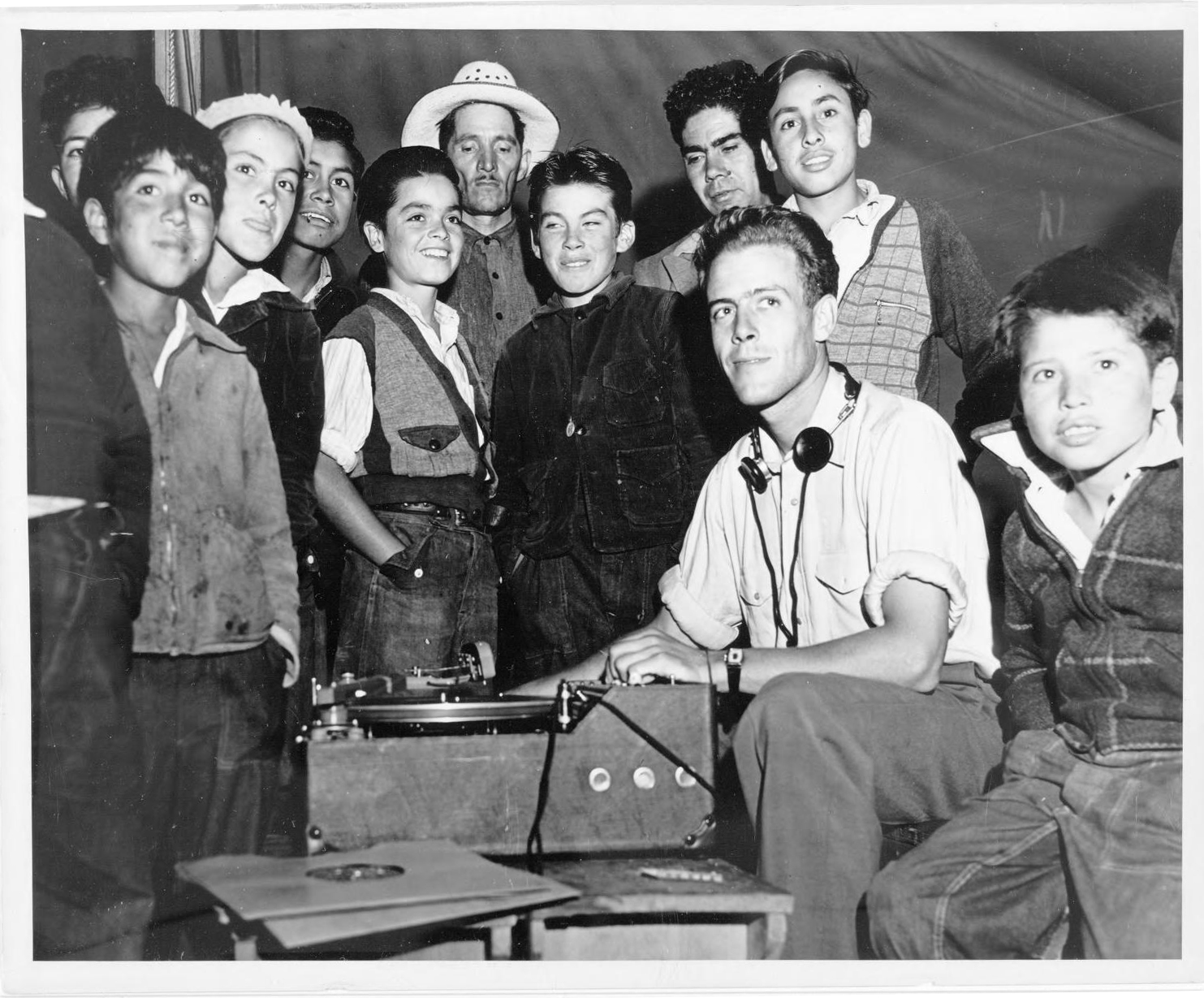
From June 29th to July 18th, 2026, the NEH, in partnership with the City University of New York (CUNY), will hold a three-week Summer Institute for Higher Education Faculty to study the Federal Writers’ Project (FWP), its origins, writers, documents, and methodologies through the lens of the 21st century classroom.
The purpose of the institute is to develop a pedagogical framework for bringing FWP materials and resources to college students across disciplines and local libraries, community centers, and other public venues. The institute will offer participants the unprecedented opportunity to collaborate on archival research, curricula, and public humanities programs that critically engage this extraordinary New Deal program.
Twenty-five selected participants, including tenured, tenure-track, and adjunct faculty, graduate students, and independent scholars will attend roundtables, small-group discussions, and presentations online in the first and third weeks of the program and will travel to Washington D.C. in the second week to perform original guided research in the archives of the Library of Congress, where the majority of FWP documents are housed. The program will be led by an interdisciplinary group of scholars, educators, and documentarians, including historians, literary scholars, folklorists, oral historians, and filmmakers, who will guide participants in pursuit of research and tangible outcomes that may include curricula, publications, digital humanities projects, and other scholarly and/or pedagogical products.
Applicants from HBCUs, HSIs, and tribal colleges will be strongly encouraged to apply.
About the fwp
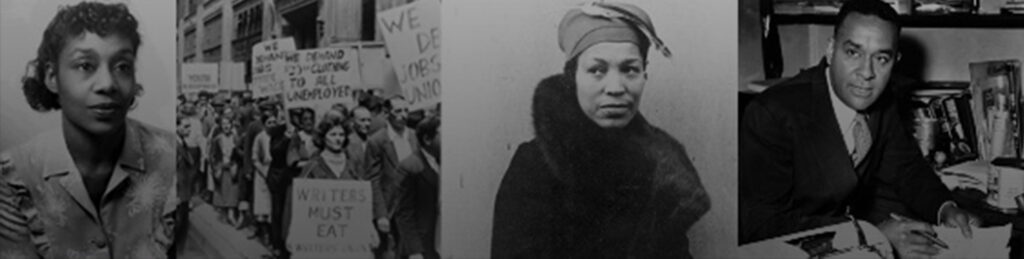
Between 1935 and 1939 at the height of the Great Depression, the Federal Writers’ Project (FWP) sent nearly 7,000 unemployed workers out to document America. Known chiefly today for its sweeping American Guide Series and extensive collection of former slave narratives, the Project also produced volumes of personal histories, ethnographic essays, and folklore, samples of which have been published in various forms since 1939. The FWP helped forge the field of oral history and was enormously influential on documentary writing and reporting. It has also been credited with helping to launch the careers of many of the country’s most celebrated writers, including Ralph Ellison, Richard Wright, Nelson Algren, Anzia Yezierska, Zora Neale Hurston, Tillie Olsen, and Dorothy West, among others, who would go on to use their fieldwork in their fiction, poetry, and prose.
Yet despite the FWP’s extraordinary accomplishments and its continued relevance to today, the FWP has, until recently, remained an under-studied field in American scholarship and a relatively unknown moment in our national history among the general public. This historical erasure, however, is beginning to change thanks to several key developments over the last decade to which this proposed institute responds.
Contemporary Interest in the FWP
For one, interest in the FWP has risen in recent years due in part to a renewed focus on our national identity. One indication of increasing awareness of the New Deal era project was a surprisingly large number of over 100 applicants to the previous NEH institute on the FWP in 2021. Adding to this renaissance of FWP studies are contemporary economic and political uncertainties, along with the COVID pandemic, and dizzying technological changes, which have called into question who we are as a nation in the 21st century, much as the crisis of the Great Depression did in the 1930s.
Scholars, writers, and educators see in the FWP’s vast archives not only a treasure trove of American history, but also a powerful source of materials and methodologies for making sense of our regional, cultural, and linguistic communities, our contested values, and our rich literary traditions. Indeed, the FWP is now emerging in the public’s consciousness.
A range of new scholarship, multi-media initiatives, and educational projects aimed at reexamining the Project’s legacy attest to this growing awareness.
This work includes:
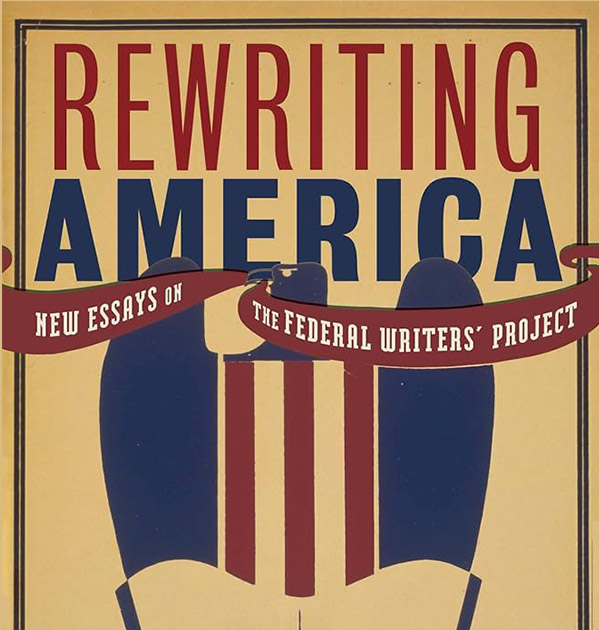
Books such as Rewriting America: New Essays on the Federal Writers’ Project, edited by Sara Rutkowski (UMass Press, 2022), the first-ever multidisciplinary retrospective of the program; Republic of Detours: How the New Deal Paid Broke Writers to Rediscover America, by Scott Borchert (Farrar, Straus and Giroux, 2021); Literary Legacies of the Federal Writers’ Project: Voices of the Depression in the American Postwar Era, by Sara Rutkowski (Palgrave, 2017); Long Past Slavery: Representing Race in the Federal Writers’ Project, by Catherine Stewart (UNC Press, 2016); No Race, No Country: The Politics and Poetics of Richard Wright, by Deborah Mutnick (UNC Press, 2025), which includes a chapter on Wright’s involvement in the FWP and shows how his work as a federal writer influenced his writing; and The Negro in Illinois: the WPA Papers, edited by Brian Dolinar (University of Illinois Press, 2015).
Moreover, in 2024, producer David Taylor launched The People’s Recorder, a ten-episode podcast that traces the FWP’s achievements and tells stories recorded by federal writers. Now entering its second season, with national distribution and support from libraries and universities, the podcast has helped to create an appetite for more public-facing information about the New Deal and its arts projects. In a similar vein, filmmaker Michelle Rene Jackson, has produced a series of short educational films that dramatize the former slave narratives in dynamic contemporary contexts.
Also on the educational front, UNC Pembroke professor Michele Fazio received a Mellon Foundation grant of nearly one million dollars in 2024 to support an extensive oral history project for which undergraduates study how Native American tribes are represented in the FWP archives and then they go on to perform their own fieldwork, documenting the life histories of the Lumbee Tribe in North Carolina with the same spirit as the 1930s fieldworkers. Betsy Bowen pioneered such work at Fairfield University in Connecticut, tracing references to literacy in the ex-slave narratives in “Reading Slavery/Writing Freedom” Research from the Federal Writers’ Project.”

This entry is licensed under a Creative Commons Attribution-NonCommercial-ShareAlike 4.0 International license.

